Every bouquet leaves here with a care card, and every care card says roughly the same things: because after six years we know exactly what kills flowers early, and it's almost never the flowers' fault.
The tricks below are unglamorous. They also work, which is more than can be said for the penny, the aspirin or the lemonade myths.
The routine that works
Clean the vase. Not rinse, wash with soap. Bacteria is the killer and last week's slime is still in there. This one step alone buys days.
Fresh water every two days. Full change, not a top-up. If the water smells even slightly, the stems are drinking swamp.
Re-cut the stems. A centimetre off, at an angle, every water change. Stems seal over like a scab, the cut reopens the drinking straw.
Strip leaves below the waterline. Submerged leaves rot fast and turn the whole vase septic.
Placement. Away from the fruit bowl (ripening fruit emits ethylene, which is flower kryptonite), out of direct sun, away from heaters and draughts.
The myths, ranked by uselessness
Aspirin: does nothing measurable. Penny: copper would need to be in there for years. Lemonade/vodka/bleach cocktails: tiny doses do little; large doses are worse than plain water. The science-y ones sound good and mostly disappoint.
What does work is the sad truth of it: clean water, clean vase, re-cut stems. Flower food sachets help mildly, ours are in every box, but they're a bonus, not the mechanism.
The 30-second version
Clean vase + fresh water every 2 days + re-cut stems = double the vase life. Everything else is decoration.
When individual stems go
Not everything in a bouquet has the same lifespan: that's normal. Pull the dead ones, re-cut the rest, drop the water level so it doesn't look thin. A bouquet often gets a second, smaller life on a shelf after its prime time in the big vase.



More from the bench

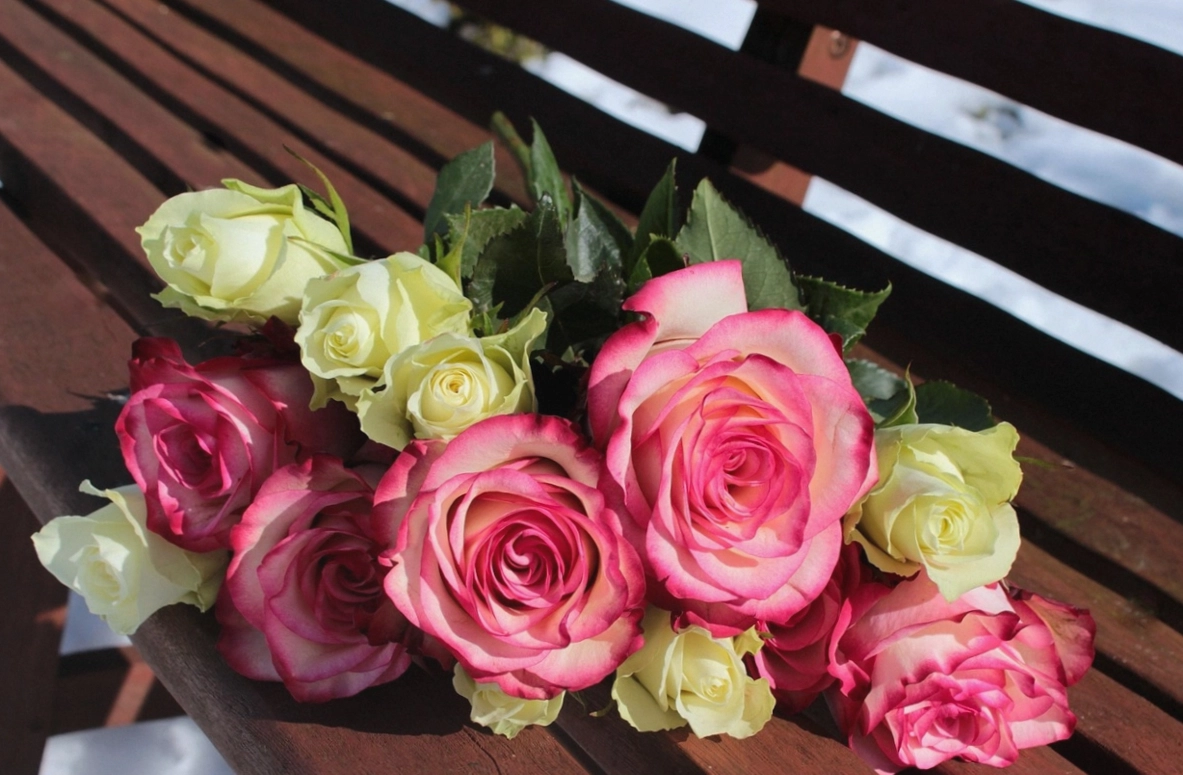
Fresh this week, and still fresh next week.
Custom bouquets from $55, same-day Oamaru delivery when you order by noon.